
How children learn at Handprints.
Children learn best through play. It is how they test ideas, build language, solve problems, and learn to work with other people. Decades of early-childhood research support what teachers see in the classroom every day: when children play, they learn. Our whole program is built on that principle.
- The Creative Curriculumplay-based, research-backed
- CDEC alignedColorado's early learning guidelines
- ISCED 0 accreditedSlovakia's national preschool program
- Nine areasof development, every week
Our Curriculum
Our curriculum follows The Creative Curriculum, is aligned with Colorado's early learning guidelines (CDEC), and is accredited under Slovakia's national preschool program (ISCED 0). Teachers plan every week against both standards at once, and the week's learning goals are shared with parents, so you always know what your child is working on.
In practice, it means the play is planned. When the class builds a volcano for the week’s topic, the teachers know exactly which areas of development it serves.
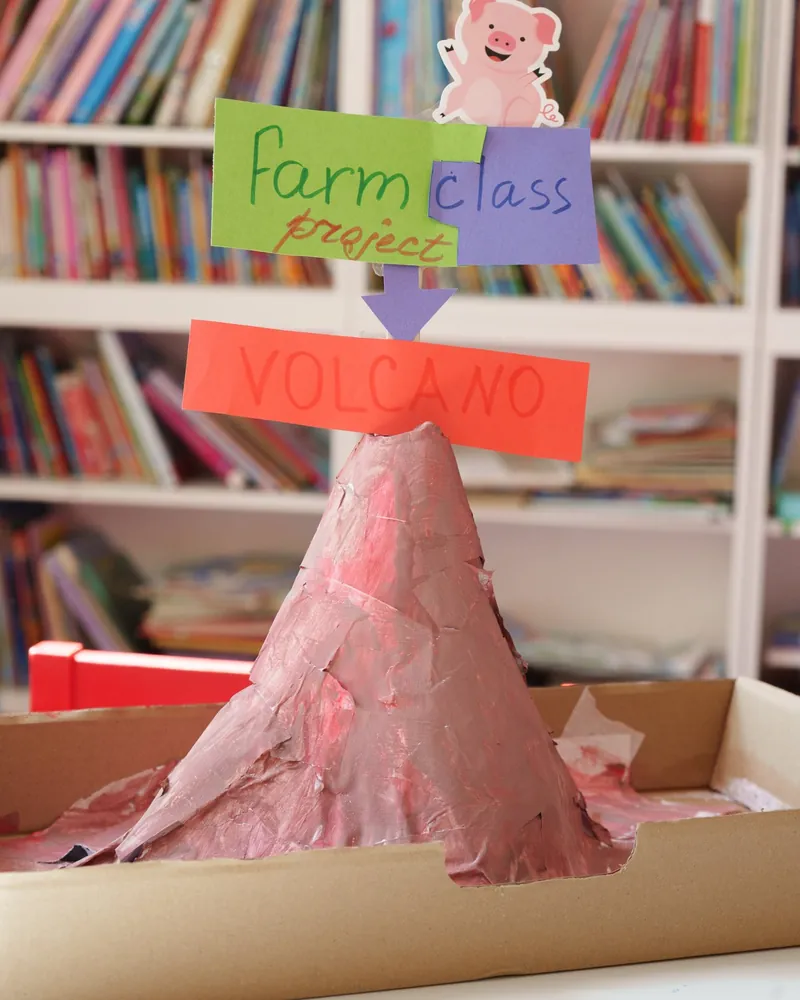 Project Work
Nine Areas of Development
Our curriculum focuses on nine key developmental areas, and a normal week of school touches all of them:
Teachers observe and document each child's progress across all nine, prepare individual support where it helps, and share progress with you at parent-teacher meetings three times a year.
What Our Teachers Do
A morning here moves along a range that early-childhood educators know well:
All three happen every day, and knowing which one a child needs right now is the heart of the craft.
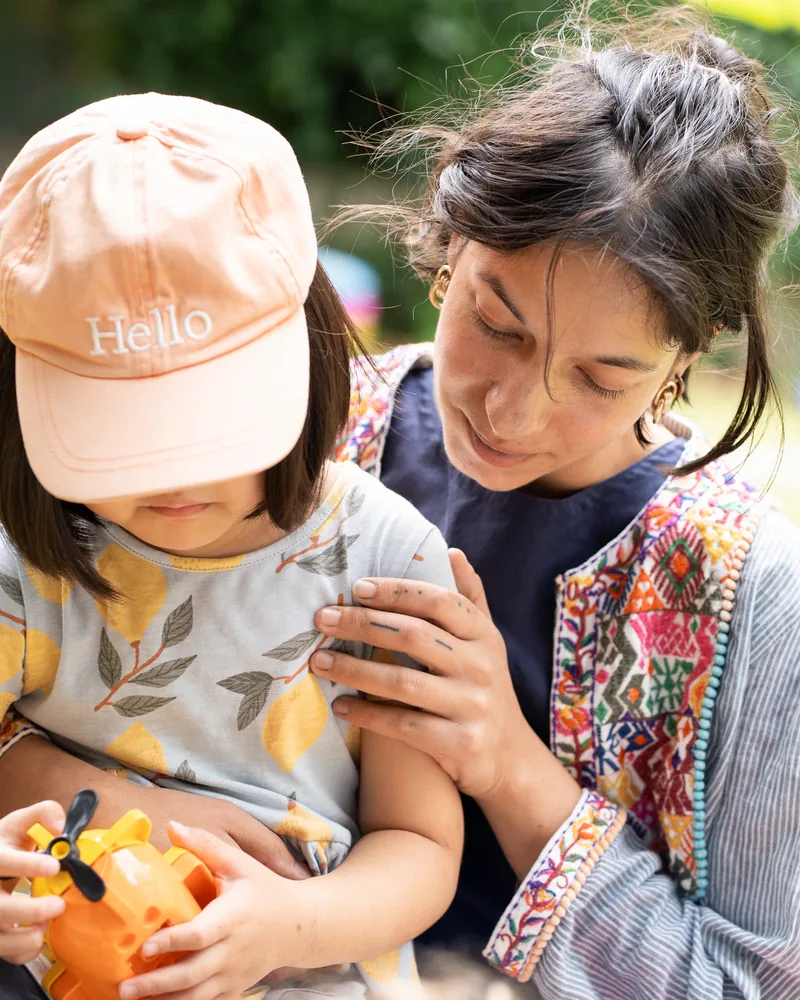
Social and Emotional Learning
Social and emotional learning is the work of recognizing feelings, managing them, understanding other people, and finding the confidence to act in a group. At this age it is curriculum, not a side effect.
Our practice draws on two sources
What that looks like, every day
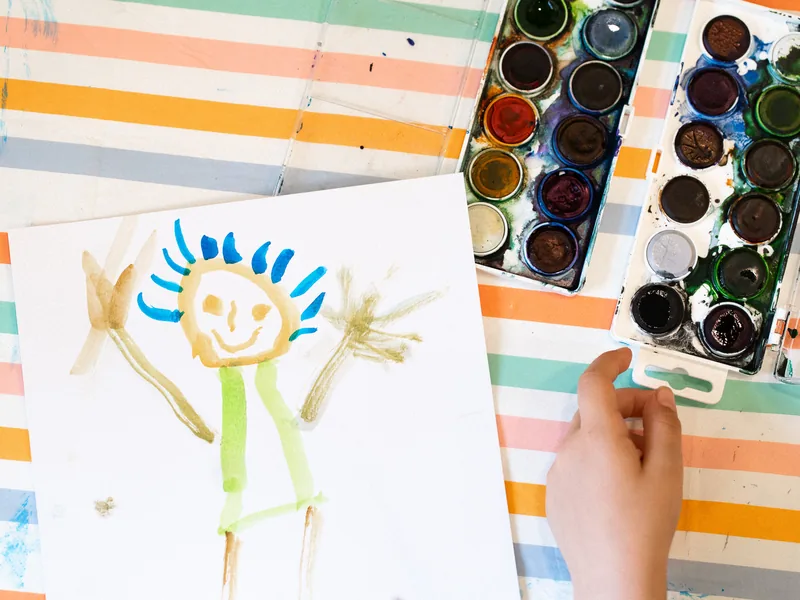 Creative Expression
Stage by stage
learns that feelings have names and that a trusted teacher helps her find calm
practices taking turns and notices when a friend is sad
learns to wait and to persist
manages most of this independently, which is a bigger part of school readiness than any worksheet
Your child’s class teachers can discuss their social and emotional development with you and help you understand how they are settling into school life.
A Day at Handprints
Familiar routines help children know what to expect. Here is an example of a Kindergarten day:
- 7:30 Arrival and free play
- 9:00 Morning snack
- 9:30 Morning circle: songs, calendar, and the week's topic
- 10:00 Learning activities: language, math, art, science
- 12:00 Outside time on the playground or in the garden
- 13:00 Lunch, cooked in our own kitchen
- 13:40 Rest and quiet time
- 15:00 Afternoon snack
- 15:30 School-readiness activities
- 16:00 Free play until pickup
This is an example Kindergarten schedule. Timings vary by class and activity; your child’s teacher can share the current routine. The school closes at 17:00.
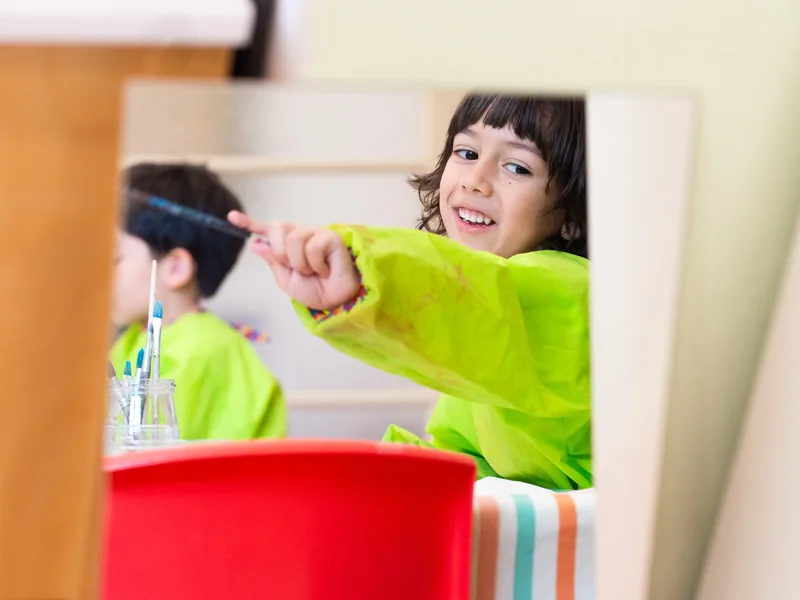 Art Class
 Jolly Phonics
How Do Children Learn to Read?
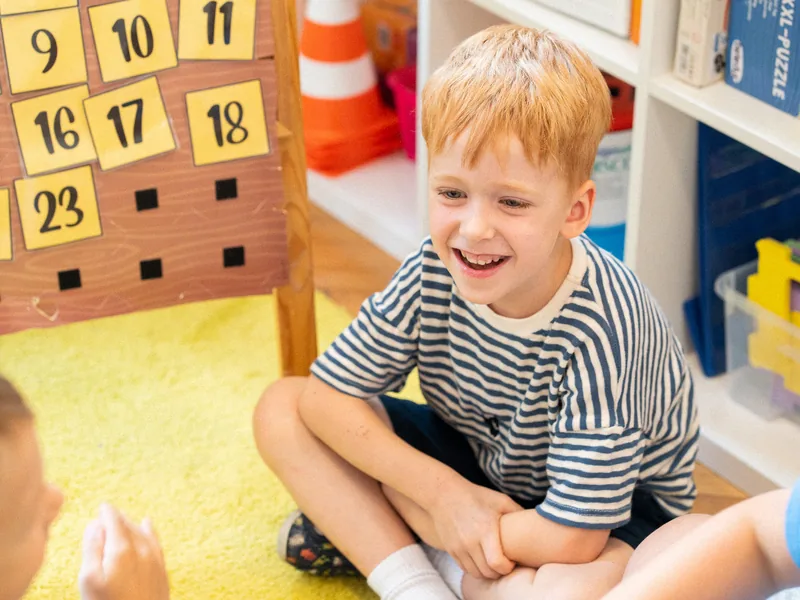
Reading at Handprints is taught through Jolly Phonics, a British program used in early-years classrooms around the world. Children learn the sounds of English before the names of its letters, and every sound arrives with its own action and its own song. Young children learn with their whole bodies, so the sounds stick.
These activities build early reading skills that children can continue developing at primary school. The next school’s programme and pace may differ.
 Story Time
Starting Without English
Does your child need English to start? No. Most of our children arrive without it. There are no language lessons and no pressure: children spend full days playing, singing, and working in English, and they typically begin understanding within their first months, each at their own pace.
In Kindergarten, Slovak is added in daily doses, so children finish the program comfortable in English and ready for either school system.
 Learning Beyond School
Exploration Learning
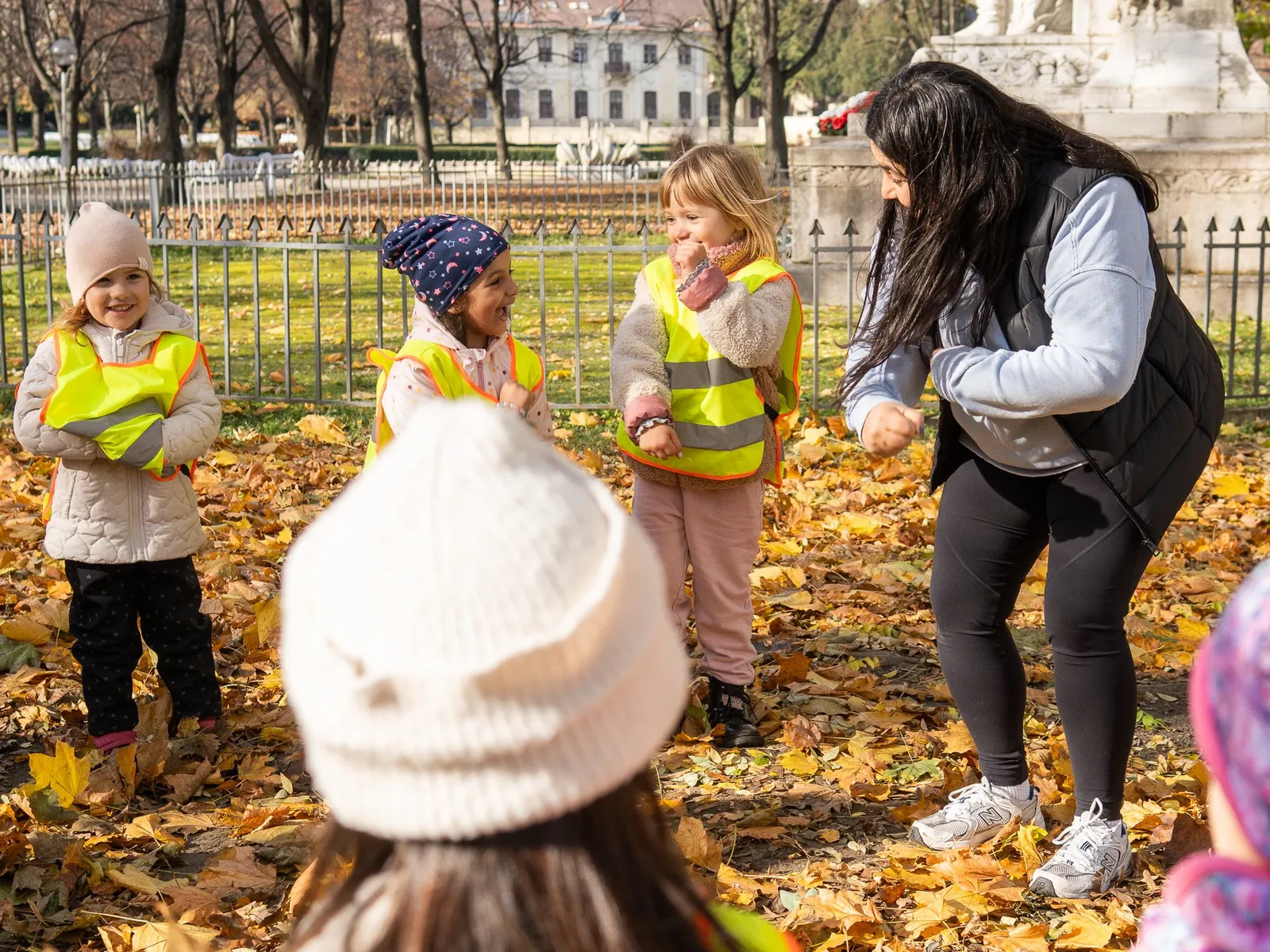
About once a month, the weekly topic leaves the building. A week about animals ends at the zoo, a week about history walks up to the castle, and a week about stories goes to the theater. Children prepare for each trip in class, and teachers connect what the children saw to the week's learning goal afterward. Old Town puts most of it within walking distance, and the bus does the rest.
Meals, Movement, and Staying in the Loop
The parts of the day that surround the learning: what children eat, how they move, and how you stay close to it all.
Meals from Our Own Kitchen
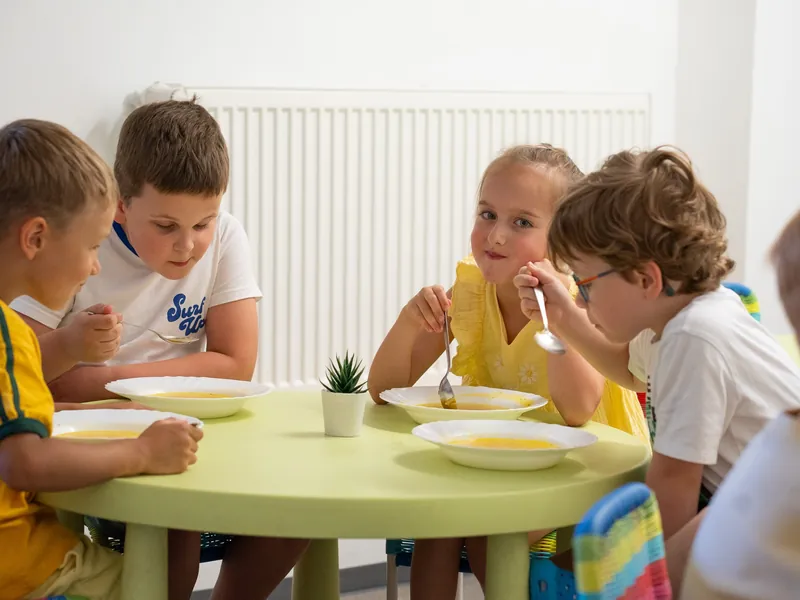
Every meal at Handprints is cooked on site, in our own kitchen: lunch and two snacks daily. The menu is pork-free, includes fruit and vegetables at every meal, and is shared with parents in advance. Children with allergies receive their own adapted meals from the same kitchen.
Movement, Music, and the Outdoors
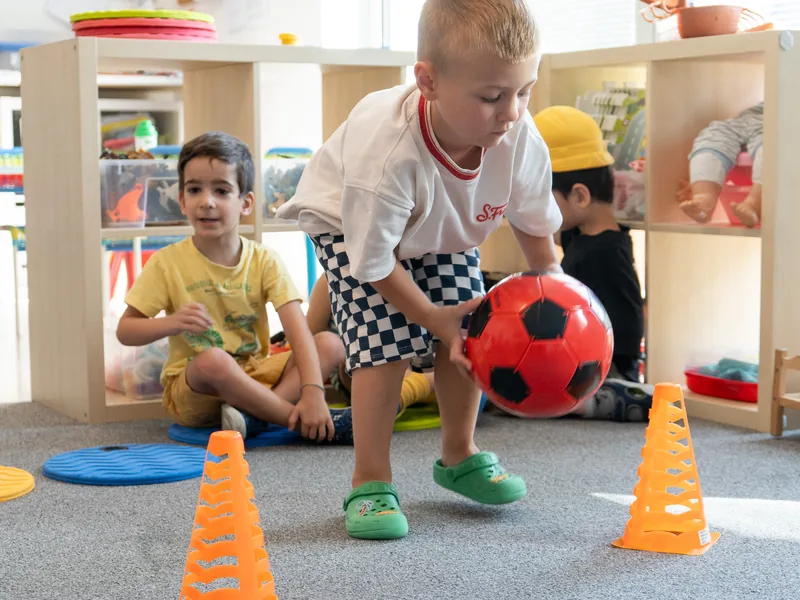
Children move every day: in the indoor gym, on the school yard, and in the school garden, where each class tends the greenhouse. A weekly gym class trains gymnastics and gross motor skills, and the children's choir gives every child a place to sing. Both are included in tuition.
How Will I Know How My Child Is Doing?
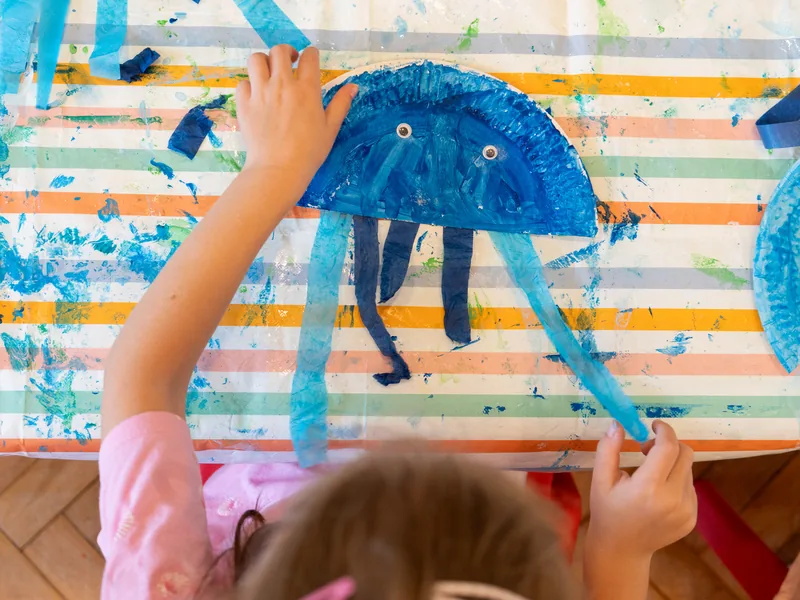
Every week, your child's teachers share the learning goals for the week ahead and a report on how the past week went. Photos arrive during the day, monthly updates summarize progress, and parent-teacher meetings run three times a year, with more available whenever you ask.
Half an hour in a classroom explains our approach better than any page can. We recommend a morning tour. You'll catch circle time and the first learning activity of the day.
Book a Tour